Intro
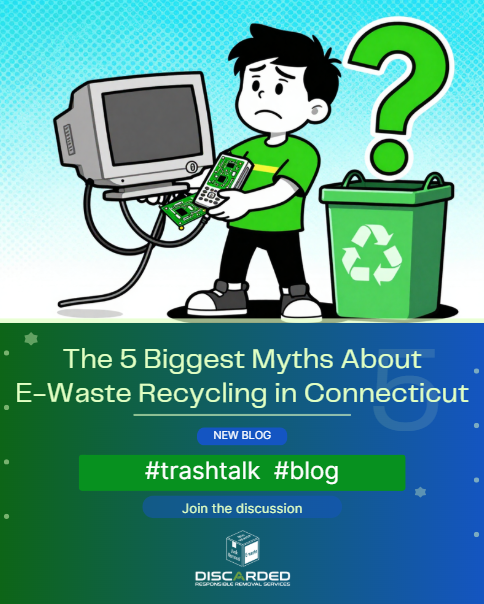
E‑waste is one of the fastest‑growing waste streams in the U.S., and Connecticut residents and businesses often have questions about how to dispose of old electronics responsibly. This post from Discarded Responsible Removal Service (formerly Discarded Junk Removal) clears up the five biggest myths we hear most often — so you can declutter with confidence across New Haven County and Fairfield County, Connecticut. #trashtalk #blog #ewaste #mythbuster
Myth 1 — “Throwing electronics in the trash is fine; they’ll just get recycled later.”
Reality: Electronics in the trash usually end up in landfills or incinerators, where hazardous components (lead, mercury, flame retardants) can leach into soil and water. Proper e‑waste recycling requires specialized handling to recover valuable materials and safely manage toxins. Municipal trash collection is not a substitute for certified e‑waste recycling.
Myth 2 — “If I delete files or factory‑reset my device, my data is gone.”
Reality: Simple deletes and factory resets often leave recoverable data. Secure data destruction (physical destruction of storage media or certified data‑wiping processes) is essential before recycling or disposal, especially for businesses and anyone with personal or financial information. Ask your junk removal or recycling provider about data‑sanitization procedures.
Myth 3 — “All e‑waste recyclers are the same — any drop‑off will do.”
Reality: Not all recyclers follow the same environmental and data‑security standards. Look for recyclers and haulers that follow state guidelines, use certified downstream processors, and provide documentation of responsible recycling. In Connecticut, some municipalities and certified programs offer proper channels; private junk removal businesses should partner with reputable recyclers. Choosing the wrong outlet can mean your electronics are exported or processed unsafely.
Myth 4 — “Recycling electronics is expensive and not worth the effort.”
Reality: While some specialized recycling services have fees, many municipalities, manufacturer take‑back programs, and community collection events reduce or eliminate costs. When you factor in the environmental benefits and the recovery of valuable materials (copper, gold, rare earths), responsible recycling is cost‑effective compared with the long‑term costs of pollution and data risk. For larger cleanouts, professional junk removal services can bundle e‑waste recycling into a single, efficient job.
Myth 5 — “If I donate or sell my old electronics, they’ll be reused — no need to recycle.”
Reality: Donation and resale are great when devices are functional and safe, but many donated electronics are outdated or broken and may still end up as e‑waste. Responsible donation programs test and refurbish devices; otherwise, you should route nonworking items to certified recyclers. Always disclose device condition and remove personal data before donating.
How Discarded Responsible Removal Service helps (short section for customers)
- Secure handling: We offer data‑sanitization options and can advise on secure destruction for hard drives and storage devices.
- Responsible downstream processing: We partner with certified recyclers to ensure electronics are processed safely and materials recovered.
- Convenience for CT residents: Serving New Haven County and Fairfield County, we handle residential and commercial e‑waste as part of larger cleanouts or standalone pickups.
- Declutter with care: Whether it’s a single TV or a full storage cleanout, we make the process simple and compliant. #declutter #junkremoval
Practical tips for CT residents before you recycle e‑waste
- Back up important files and then perform secure wiping or remove drives for physical destruction.
- Check manufacturer take‑back programs (many accept old phones, batteries, and appliances).
- Use municipal collection events or certified drop‑offs for TVs and large appliances.
- Ask for documentation from private haulers or recyclers showing responsible processing.
- Separate batteries and hazardous components when possible; these often require special handling.
Local resources & compliance notes (brief)
Connecticut has state and municipal programs and regulations that encourage proper e‑waste handling and manufacturer take‑back options. For large volumes or mixed loads (appliances, TVs, computers), using a professional junk removal business that follows state guidance reduces risk and ensures compliance.
0 Comments