Introduction
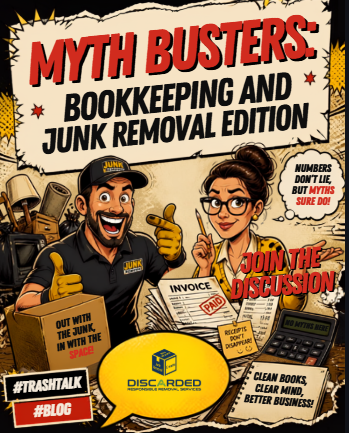
Running a Junk Removal Business isn’t just about trucks, muscle, and good timing — it’s also about clean books. For Discarded Responsible Removal Service (formerly Discarded Junk Removal), bookkeeping is a strategic service that protects the business, helps leadership make smarter decisions, and keeps customers confident that they’re working with a professional operation. This post busts common bookkeeping myths for junk‑removal owners and operators in New Haven County and Fairfield County, Connecticut, and gives practical steps to keep your finances tidy, compliant, and growth‑ready.
1. Hook: “We’re not just hauling junk — we’re hauling clarity.”
Most people think bookkeeping is boring. For a junk removal company, it’s the difference between surviving and scaling. Below are the myths that keep small operators stuck — and the real moves that free you to grow.
2. Myth 1 — “I can track everything in my head or on a napkin”
Why it’s wrong: Memory and loose notes don’t create an audit trail. Missing receipts, undocumented jobs, and inconsistent pricing lead to lost revenue and tax headaches. Small service businesses that adopt simple bookkeeping systems reduce errors and improve cash flow visibility.
What to do instead
- Use a cloud accounting tool (even a basic one) to log income, expenses, and invoices daily.
- Photograph receipts immediately and attach them to transactions.
- Reconcile bank and payment accounts weekly.
3. Myth 2 — “Bookkeeping is optional until I make a lot of money”
Why it’s wrong: Early bookkeeping builds habits and gives you data to price jobs correctly, track profitability by service (e.g., residential pickup vs. estate cleanouts), and prepare for loans or grants. Lenders and grantors expect organized financials.
What to do instead
- Track job costs (labor, disposal fees, fuel) per job to know true margins.
- Keep a separate business bank account and card.
- Save monthly profit & loss statements — they’re your business report card.
4. Myth 3 — “I don’t need to separate personal and business expenses”
Why it’s wrong: Mixing accounts complicates taxes, weakens legal protections, and makes it harder to prove business expenses. For contractors and small LLCs, separation is essential for liability protection and clean audits.
What to do instead
- Open a dedicated business checking account and credit card.
- Pay yourself a consistent draw or payroll and record it.
- Use accounting categories to separate owner draws, payroll, and operating expenses.
5. Myth 4 — “I can skip payroll and treat everyone as contractors”
Why it’s wrong: Misclassifying workers risks fines, back taxes, and penalties. Proper classification depends on control, independence, and the nature of the work. For recurring, supervised staff, payroll and payroll taxes are often required.
What to do instead
- Consult a payroll provider or accountant to classify workers correctly.
- Keep clear job descriptions and time records.
- Budget for payroll taxes and workers’ comp.
6. Myth 5 — “Accounting is only for taxes”
Why it’s wrong: Accounting informs pricing, marketing ROI, equipment replacement schedules, and strategic decisions. It’s a leadership tool — not just a tax chore.
What to do instead
- Use monthly financial reports to set targets and measure marketing campaigns (e.g., cost per booked job).
- Forecast cash flow for slow seasons and equipment purchases.
- Track KPIs: average job value, disposal cost per job, labor hours per job.
7. Myth 6 — “E‑waste and special disposal are minor line items”
Why it’s wrong: E‑waste disposal, hazardous materials, and recycling fees can materially affect margins. Properly tracking these costs ensures accurate pricing and compliance with local regulations in Connecticut.
What to do instead
- Create separate accounting categories for e‑waste, recycling rebates, and hazardous disposal.
- Pass disposal fees transparently to customers or include them in job estimates.
- Keep manifests and disposal receipts for compliance.
8. Practical Bookkeeping Checklist for Junk Removal Businesses
- Daily: Log jobs, payments, and receipts. Photograph receipts.
- Weekly: Reconcile bank and payment processor accounts. Review open invoices.
- Monthly: Generate Profit & Loss and Balance Sheet. Review job profitability.
- Quarterly: Pay estimated taxes; review payroll and worker classification.
- Annually: Prepare documents for tax filing; review insurance and licensing.
9. Leadership Insight from Roody Jean Baptiste (President, DRRS)
“Bookkeeping isn’t just numbers — it’s how we protect our team and our customers. When we track costs per job, we can price fairly, invest in safety, and offer reliable service across New Haven County and Fairfield County.” — Roody Jean Baptiste.
Roody emphasizes that disciplined bookkeeping allowed DRRS to offer transparent pricing, invest in training, and expand responsibly. That discipline also made it easier to qualify for financing and to offer seasonal discounts like the current autumn promotion. (Leadership insight paraphrased from company practices.)
10. How Bookkeeping Protects Your Business (and Customers)
- Compliance: Proper records reduce audit risk and ensure correct tax filings.
- Pricing accuracy: Know your true costs and avoid undercharging.
- Customer trust: Clear invoices and documented disposal build credibility.
- Growth readiness: Clean books make it easier to get loans, grants, or investor interest.
11. Tools & Resources (Starter Kit)
- Cloud accounting: QuickBooks Online, Xero, or Wave for small businesses.
- Receipt capture: Expensify, Hubdoc, or built‑in mobile capture in accounting apps.
- Payroll: Gusto, ADP, or local payroll providers for correct tax withholding.
- Local help: Work with a Connecticut‑licensed accountant familiar with small service businesses and disposal regulations in New Haven County and Fairfield County.
12. Final Payoff — The Slow and Steady Win
You don’t need to overhaul everything overnight. Start with one habit: record every job and every receipt. Slow, steady bookkeeping builds a business that’s resilient, compliant, and ready to scale. That’s how Discarded Responsible Removal Service turns clutter into clarity — for customers and for the company.
Local Services & Offer
Discarded Responsible Removal Service (formerly Discarded Junk Removal) — serving New Haven County and Fairfield County, Connecticut. We handle residential cleanouts, e‑waste, estate cleanups, and commercial junk removal with transparent pricing and responsible disposal. Mention this blog for seasonal offers. #trashtalk #blog #ewaste #mythbuster #bookkeeping #accounting #strategicservice #businessprotect #leadershipinsightfromroody
0 Comments