A practical guide from Discarded Responsible Removal Service (formerly Discarded Junk Removal)
For homeowners and property managers in New Haven County and Fairfield County, Connecticut — declutter now to protect your property, safety, and the environment.
Why act before the first frost?
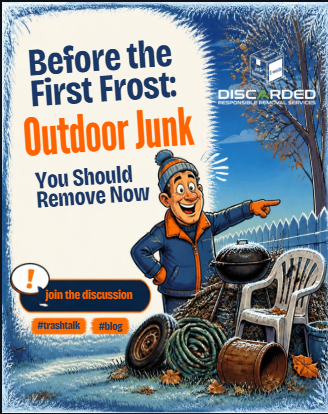
When the temperature starts dropping and frost is on the horizon, outdoor junk becomes more than an eyesore. Leftover furniture, broken tools, e‑waste, and hazardous items can freeze, corrode, trap moisture, and create safety hazards. Removing these items now saves you time, prevents winter damage, and reduces the risk of costly repairs in spring. As a local Junk Removal Business, Discarded Responsible Removal Service recommends a seasonal sweep to protect your home and neighborhood.
Top outdoor items to remove before frost (and why)
1. Broken outdoor furniture and cushions
Why: Fabric and foam trap moisture, freeze, and grow mold; metal frames can rust.
Do this now: Remove cushions and either store indoors or recycle if damaged. Break down metal frames for recycling or schedule curbside pickup.
2. Old grills and propane tanks
Why: Propane tanks left outside can corrode; grills with grease buildup are fire hazards.
Do this now: Empty and clean grills; have propane tanks exchanged or disposed of at certified facilities — never put tanks in regular trash.
3. Lawn equipment and gas cans
Why: Fuel left in engines or cans can gum up systems and leak; freezing temperatures can crack plastic.
Do this now: Drain fuel or run equipment until empty; store tools in a dry place or have unusable units removed by a junk removal service.
4. Broken planters, pots, and garden décor
Why: Ceramic and plastic can crack in freeze/thaw cycles and create sharp hazards.
Do this now: Recycle or dispose of broken pieces; keep intact planters stored or stacked to save space.
5. Old outdoor lighting and extension cords
Why: Exposed wiring and damaged cords are electrical hazards when wet or frozen.
Do this now: Test and replace damaged cords; recycle e‑waste and electrical components responsibly.
6. E‑waste left outdoors (speakers, radios, small electronics)
Why: Electronics exposed to moisture and cold can short, leak batteries, and release toxins.
Do this now: Collect e‑waste and route to certified e‑waste recycling or schedule a responsible pickup. Avoid leaving electronics outside where they can be damaged.
7. Dead batteries and battery‑powered tools
Why: Batteries can corrode, leak, or short in cold conditions.
Do this now: Tape terminals on lithium batteries, store them in a cool dry place, and take them to battery recycling points or include them with an e‑waste pickup.
8. Broken fencing, pallets, and scrap wood
Why: Wet wood freezes, warps, and becomes harder to remove; loose nails are hazards.
Do this now: Stack and secure salvageable wood; remove rotten or broken pieces and recycle or dispose of them properly.
9. Abandoned appliances and bulky items
Why: Refrigerators, washers, and other appliances left outside can leak fluids and become environmental hazards.
Do this now: Schedule a bulky item pickup with a licensed junk removal business to ensure safe disposal and recycling.
Safety and environmental considerations
- Never place e‑waste, batteries, or propane tanks in regular trash. These items require special handling.
- Tape battery terminals and store them separately to prevent short circuits during transport.
- Secure loose items before removal to avoid injury from shifting debris in cold, slippery conditions.
- Protect data: Remove or destroy storage devices from outdoor electronics (external drives, USB sticks) before disposal.
- Follow local rules: Many towns in New Haven County and Fairfield County run seasonal bulky‑item and e‑waste collection events — check municipal schedules.
A simple pre‑frost declutter checklist
- Walk your property and list outdoor items that are broken, unused, or hazardous.
- Separate into piles: keep/store, donate/resell, recycle (e‑waste/batteries), dispose.
- Tape battery terminals and bag small batteries.
- Drain fuel from small engines and gas cans or run them dry.
- Bundle cords and label electronics for recycling.
- Schedule a responsible pickup with a licensed junk removal business if you have bulky items.
- Note municipal e‑waste and bulky collection dates for New Haven County and Fairfield County.
Why use a local, responsible junk removal business?
Choosing a licensed, local provider like Discarded Responsible Removal Service (formerly Discarded Junk Removal) ensures:
- Compliance: Proper handling of hazardous materials and e‑waste.
- Convenience: Curbside pickup and bulk removal save time and effort.
- Environmental care: Certified recyclers recover materials and prevent pollution.
- Local knowledge: We understand Connecticut rules and seasonal schedules across New Haven County and Fairfield County.
Seasonal timeline: when to act
- 2–4 weeks before expected frost: Start your outdoor sweep.
- 1–2 weeks before frost: Finalize removal of hazardous items (propane, batteries, e‑waste).
- After removal: Store seasonal items indoors and schedule any remaining pickups.
Local resources (Connecticut)
- Check your town’s public works or solid waste page for bulky item and e‑waste collection dates.
- Use certified e‑waste recyclers for electronics and battery drop‑off points for safe battery disposal.
- For large or mixed loads, schedule a pickup with a local Junk Removal Business that follows state disposal guidelines.
Final thoughts
When the temperature starts dropping, small delays can turn manageable outdoor junk into winter headaches. A focused pre‑frost cleanup protects your property, reduces hazards, and keeps Connecticut neighborhoods cleaner. If you’re planning a seasonal declutter in New Haven County or Fairfield County, Discarded Responsible Removal Service is ready to help you remove bulky items, handle e‑waste responsibly, and make your property winter‑ready.
0 Comments