Why year‑end scrap removal matters
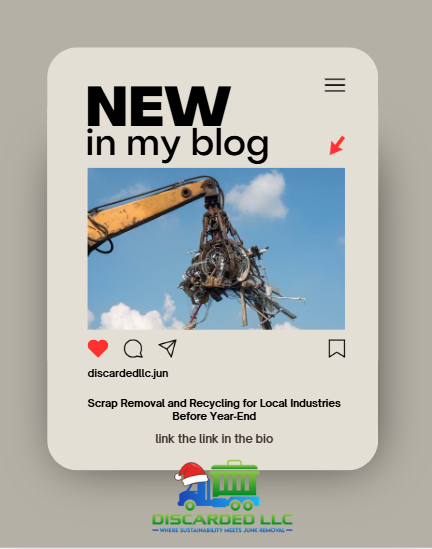
As manufacturers close out the year, clearing scraps improves operational efficiency, reduces safety hazards, and supports sustainability goals. Discarded Junk Removal specializes in industrial cleanouts across New Haven County and Fairfield County, Connecticut, helping local industries reclaim space and reduce liability. Book early to secure preferred dates and avoid holiday backlogs.
What we handle and how we work
- Materials collected: ferrous and non‑ferrous metals, plastics, wood pallets, cardboard, and general industrial debris.
- Process: on‑site assessment → container placement or direct haul → sorting for recycling/donation → certified disposal or recycling receipts.
- Benefits: faster production restarts, safer workspaces, and documented recycling for sustainability reporting.
Local recycling partners and options
Connecticut has established scrap processors and recycling facilities that accept industrial materials and offer pickup services. Examples include regional scrap metal and recycling centers that serve manufacturers and municipalities. Partnering with local recyclers helps keep materials in the circular economy and may reduce disposal costs.
How to prepare your facility for a cleanout
- Inventory: list material types and approximate weights.
- Segregate: separate metals, plastics, and general waste to speed processing.
- Access: ensure clear truck access and designate staging areas.
- Documentation: prepare any permits or site rules for contractors.
Call to action
Discarded Junk Removal is ready to support manufacturers across New Haven County and Fairfield County, Connecticut with tailored scrap removal and recycling plans. Call/Text: 475‑332‑1908 or Book Online: www.discardedllc.com/book to schedule a site assessment and year‑end pickup.
Risks, limitations, and practical tips
- Risk of improper disposal: Hazardous or regulated wastes require special handling; disclose these materials during the assessment to avoid fines.
- Logistics constraints: Holiday schedules and high demand can limit availability—book early.
- Cost trade‑offs: Recycling can lower tipping fees but may require sorting labor; request a detailed pricing breakdown.
- Verification: Ask for recycling receipts or manifests to document responsible disposal for audits and sustainability reporting.
Good take